
Specialty services
Sewer Scope / Video Sewer Line Inspections
A camera inspection of accessible sewer piping documents visible conditions, clarifies important limitations, and gives Dallas-Fort Worth homeowners useful information for their next conversation with a plumbing specialist.
Schedule this inspectionSewer Scope Inspections
A Camera View of a Hidden Line
Much of a home’s drain and sewer piping is below the slab, underground, or behind finished surfaces. A sewer scope uses a camera through an available access point to record what can be seen inside the line. It can be useful during buyer due diligence, when a homeowner has recurring drainage concerns, or when a visible record will help frame a repair discussion. The resulting visual documentation gives homeowners and plumbing specialists a practical record of accessible piping conditions at the time of the inspection.
A camera inspection of accessible sewer piping documents visible conditions, clarifies important limitations, and gives Dallas-Fort Worth homeowners useful information for their next conversation with a plumbing specialist.
A focused plan starts with your property
Look closely. Decide clearly.
Camera access
Confirm a usable access point and discuss the reachable portion of the line.
Visible line condition
Observe accessible pipe interiors, obstructions and conditions that warrant follow-up.
A useful record
Use documented observations to discuss repair or further evaluation with a qualified plumber.
A closer point of view
What happens below the surface?
An accessible cleanout and a traversable line give the camera a path. The recording documents the conditions visible along that path.
Access and Preparation Before the Appointment
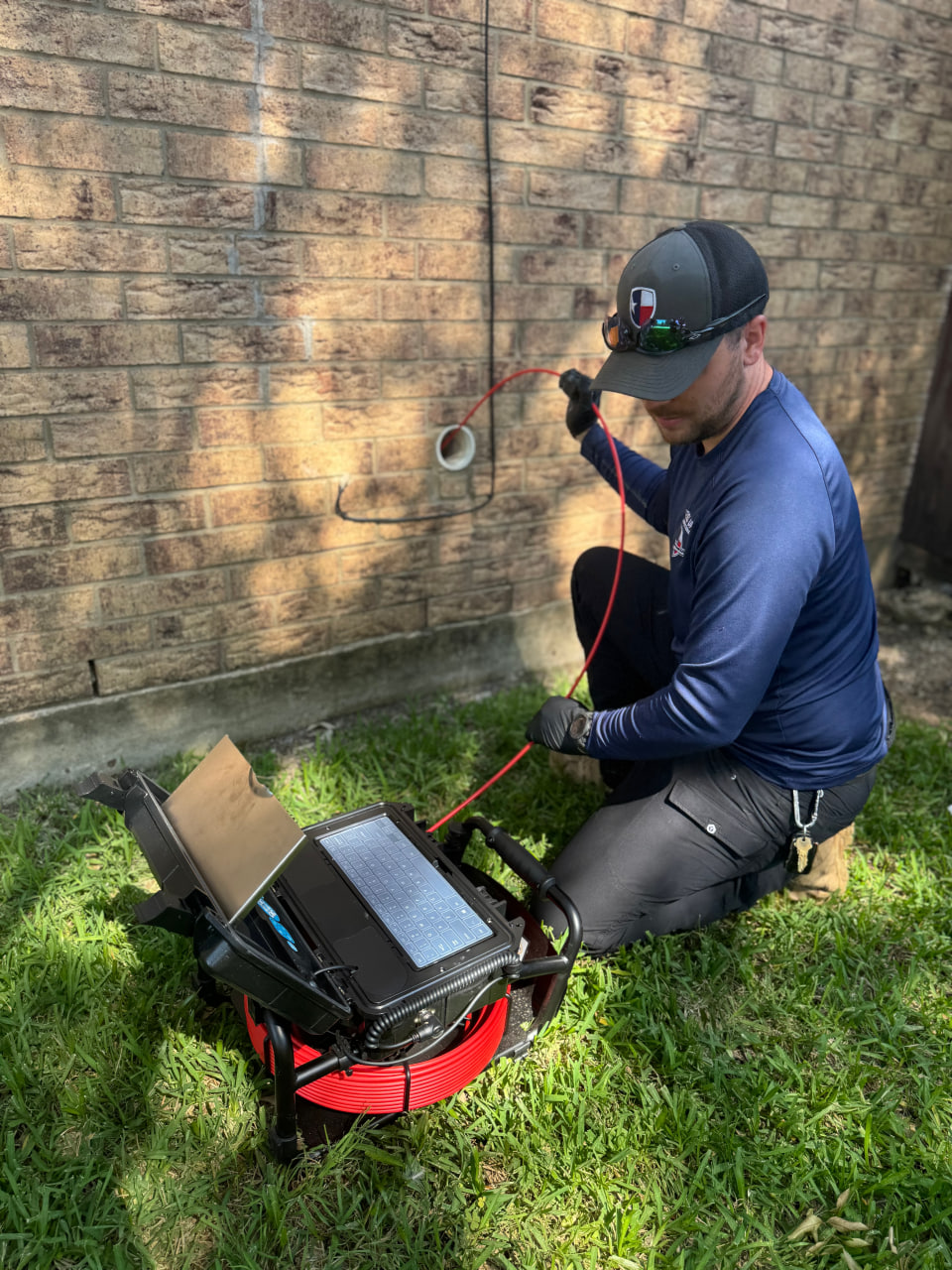
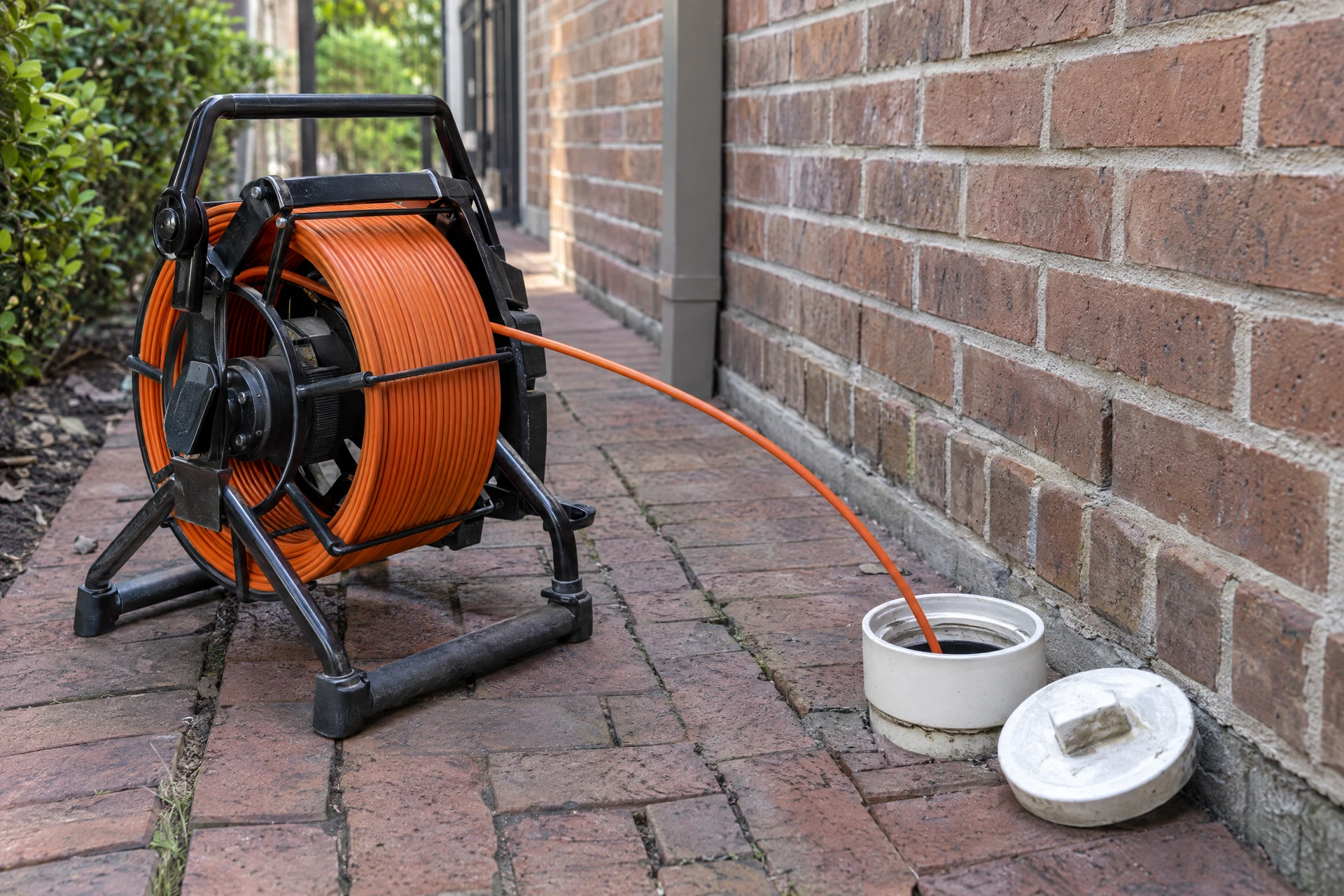
The camera uses a usable entry point, often an accessible cleanout. Before the appointment, please identify known cleanouts and, where practical, move vehicles, belongings, planters, or other items that block access. Let us know if an entry point is indoors or near finished surfaces, and share known backups, slow drains, recent drain cleaning, repairs, or sewer odors. This preparation helps us plan the camera setup, protect the work area, and place the resulting footage in the context of the home’s drainage history. The report records the entry point and any access conditions that affect the camera run.
How the Camera Inspection Proceeds
When conditions allow, the inspector guides a camera through the available entry point and observes the recorded image as it moves along the line. The camera documents the route it safely reaches, creating a useful visual record for the homeowner’s files and a future plumbing conversation. Pipe bends, debris, standing water, an obstruction, damaged piping, or equipment limitations can shape the available route and footage. For the protection of the piping and property, the inspector stops the run when equipment should not be advanced further and records the observed route and relevant conditions.
Visible Pipe Conditions and Useful Footage
Video may show roots, buildup, water remaining in the pipe, separated-looking connections, distorted piping, an obstruction, or an area the camera cannot pass. It may also show an apparently open portion of line. The report pairs applicable photos or video with clear visible observations, helping homeowners communicate what was seen to a qualified plumbing specialist. Water, residue, pipe material, bends, and image quality can affect the clarity of individual views, so the footage is documented as the visible condition captured during the inspection. When an observed condition needs a repair decision, a plumbing specialist can use the record as a starting point for further evaluation.
Coverage, Documentation, and Next Steps
A sewer scope creates a visual record of accessible sewer piping from the available entry point. The report identifies the observed route, visible conditions, and any access or visibility factors that shaped the footage, giving homeowners a clear account of the inspection. This camera-inspection service supports informed discussions with the appropriate plumbing professional; cleaning, leak or pressure testing, excavation, repair, code, permit, and utility-side questions are addressed through the corresponding specialist services. Municipal mains, shared components, septic systems, drain fields, private lifts, concealed branch lines, and areas beyond the camera’s route can require their own evaluation. A partial run is clearly documented so the next professional has useful context.
Your report, access & next steps
Your Report and Appropriate Next Steps
Level Up Home Inspections provides a same-day digital home-inspection report with applicable photos and video, visible observations, and noted limitations. Wade Larimer, Owner/Lead Inspector, TREC #25012, Mold Assessment Technician #1538, and TDA Technician #0952210, leads the company’s inspection work. We remain available after the appointment to help you understand the report. When footage shows a concern, or symptoms continue despite an inconclusive view, a qualified plumbing specialist can evaluate further, identify the cause as needed, and advise on cleaning, repair, replacement, code, permit, or utility-side questions.
Before we arrive
What to expect.
Simple access preparation and your questions help us focus the inspection on the property details that matter to you.
- Review of the known entry point and site conditions affecting camera access.
- Visual documentation of line portions the equipment can safely reach.
- A same-day digital report with applicable photos or video and stated limitations.
- Post-inspection support and specialist follow-up guidance when appropriate.
Useful answers
Your questions, answered.
Do I need to be present for a sewer scope?
Property access can be arranged in advance. Being available can help answer questions about cleanout locations, drainage history, or access conditions. Whether or not you attend, the report records visible observations and any conditions encountered during the camera run.
What sewer-line information will the report include?
The camera follows the reachable route from the available entry point, creating footage of the inspected line. Your report identifies the portions viewed and records relevant visible conditions. The footage and observations give you a useful record to share with a qualified plumbing professional when planning follow-up.
What if the video shows roots, standing water, or damage?
We document the visible condition and explain the observed concern or access condition in the report. That footage gives a qualified plumbing specialist useful context for further evaluation, including identifying the cause and advising on suitable cleaning, repair, or replacement options.
Let's talk about your property