
Specialty services
Thermal Imaging
Thermal imaging adds temperature-pattern evidence to a visual inspection, helping identify visible, accessible areas that may warrant closer evaluation without treating an image as a diagnosis.
Schedule this inspectionThermal Imaging Insight
See Temperature Patterns in Context
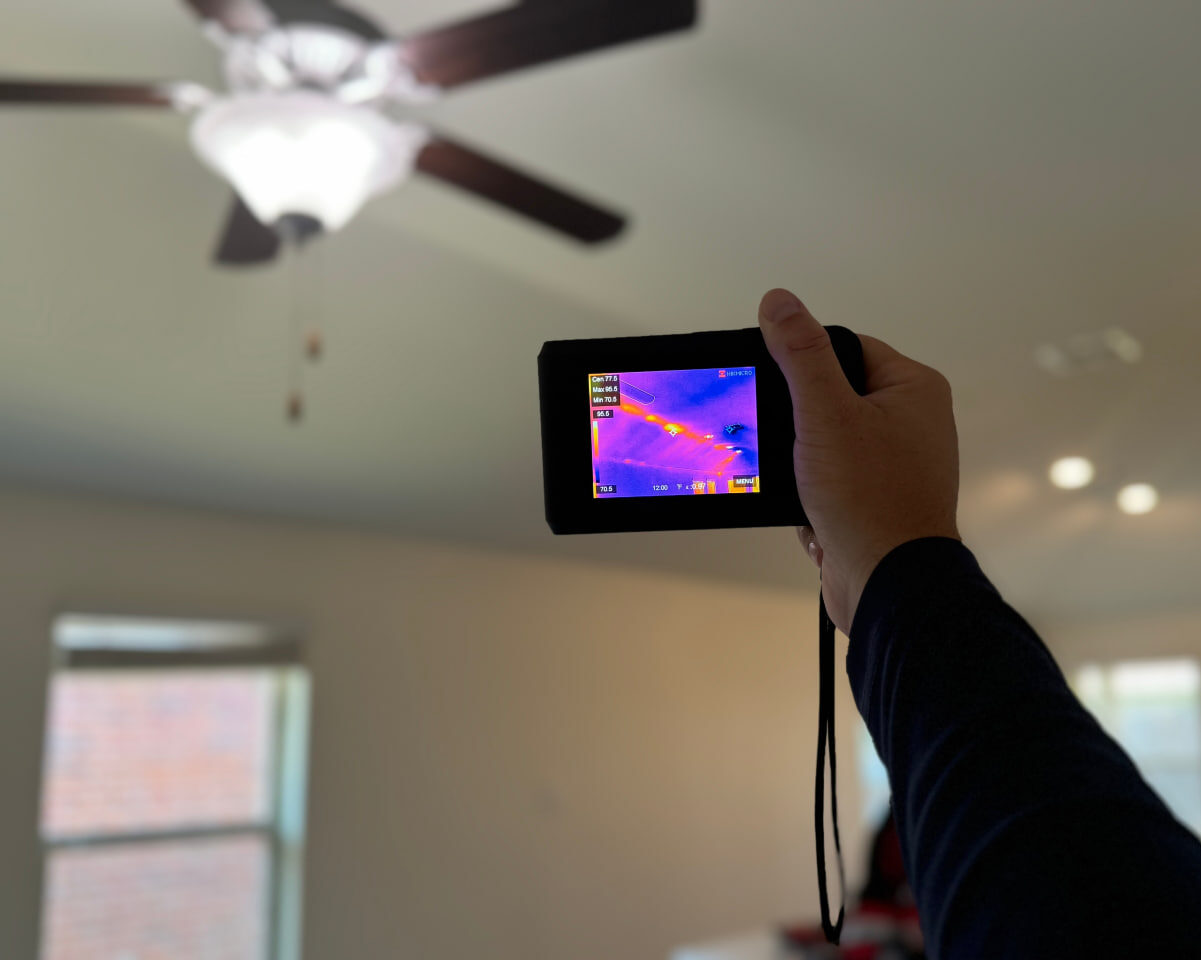
Thermal imaging uses an infrared camera to display differences in surface temperature. During a Level Up Home Inspections visit, it adds useful evidence to the visible, accessible areas of a Dallas-Fort Worth home. A cooler or warmer pattern can focus attention on a ceiling, wall surface, window area, electrical component, plumbing fixture, or HVAC register for a closer look. Wade Larimer, Owner/Lead Inspector, explains what is visible and how the pattern fits the home’s observed conditions.
Temperature differences can reflect air movement, recent sunlight, equipment operation, insulation variation, moisture, or other conditions. Considering those influences helps turn an image into a useful observation and a practical next step when one is warranted.
Thermal imaging adds temperature-pattern evidence to a visual inspection, helping identify visible, accessible areas that may warrant closer evaluation without treating an image as a diagnosis.
A focused plan starts with your property
Look closely. Decide clearly.
Surface temperatures
Look for meaningful temperature patterns under suitable inspection conditions.
Context & confirmation
Consider construction, weather, operation and other observations before drawing conclusions.
Useful follow-up
Understand when a pattern warrants further testing or a qualified specialist.
A closer point of view
See a pattern. Ask the next question.
Thermal images show surface temperature differences. Observation and other appropriate tools help determine what a pattern might mean.
Surface Temperatures With Context
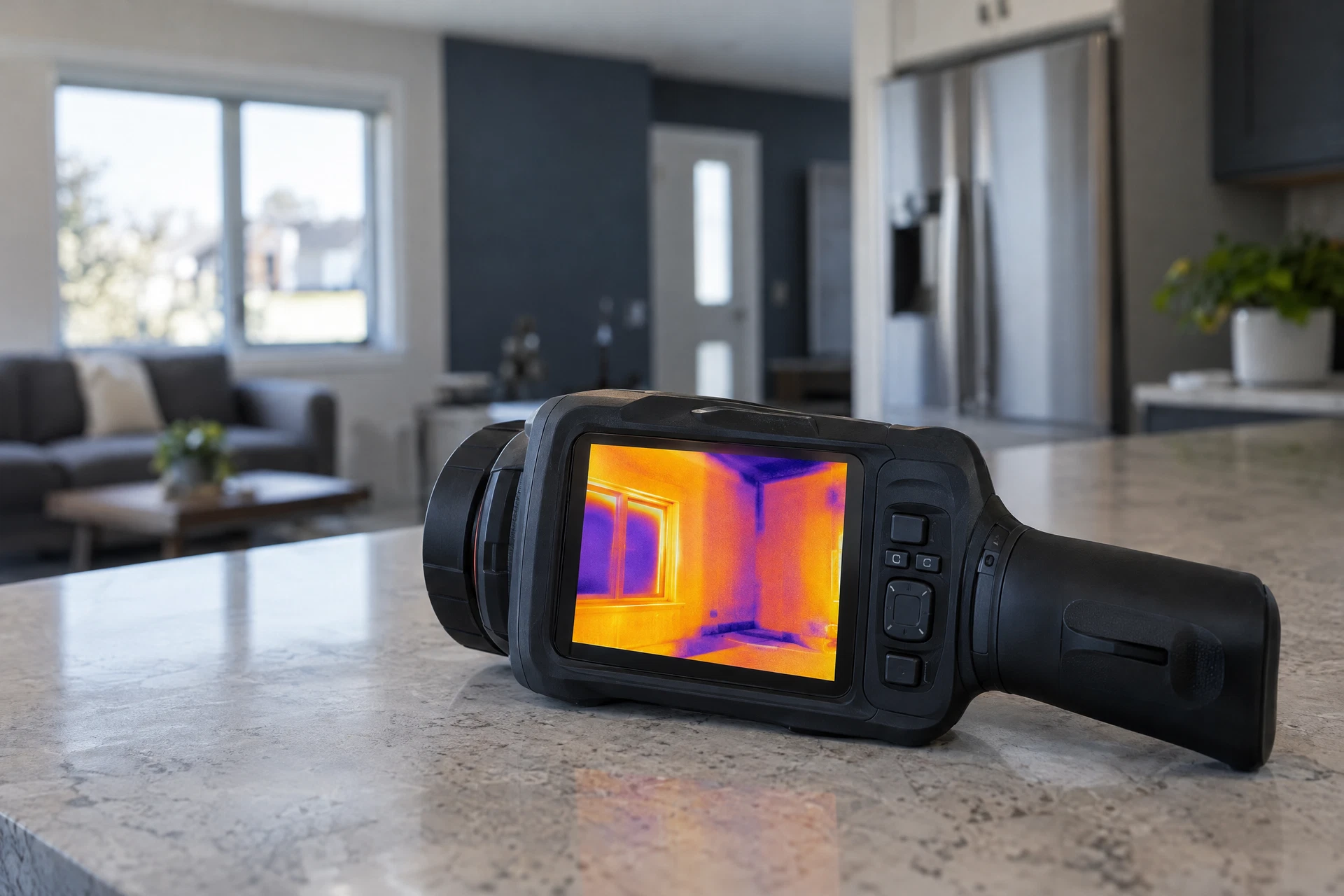
An infrared camera records the temperature of the surface it sees, making it a useful tool for comparing accessible surfaces and identifying areas that deserve attention. A cooler area may relate to air movement, insulation variation, moisture, or other site conditions, while a warm pattern may be expected near operating equipment, a sun-exposed wall, or an area affected by recent thermostat changes. We consider nearby surfaces, the home’s orientation, active systems, and whether an area has had time to stabilize before describing a notable observation.
From Pattern to Practical Next Steps
When a pattern appears unusual, we look for corroborating visible evidence where accessible. That may include staining, material damage, apparent moisture at a fixture, condensation, a supply-air difference, or a gap around an opening. We may compare similar locations and note operating conditions so the report connects the observed pattern with the conditions present at the visit. When further evaluation is appropriate, the report can recommend a qualified plumber, HVAC contractor, electrician, or other relevant specialist.
Conditions That Shape Meaningful Comparisons
Thermal observations reflect conditions at the time of the inspection. Outdoor temperature, direct or recent sun, rain, wind, indoor humidity, thermostat settings, and HVAC run time can all influence surface temperatures. A recently used shower, oven, fireplace, dryer, or dishwasher can also change what the camera sees. In North Texas, strong sun and fast weather changes can create substantial differences across walls, windows, roof-related surfaces, and attic areas. Documenting relevant conditions helps explain the image and supports meaningful comparisons.
Prepare for a More Focused Appointment
Please provide clear, safe access to the electrical panel, HVAC equipment, plumbing fixtures, windows, and accessible attic entries. Normal heating or cooling operation before the appointment is generally helpful, and there is no need to change settings solely to create a result. Tell us about recent leaks, comfort concerns, repairs, or rooms that behave differently. Clear access and a short history of the home help focus the inspection on areas that matter to you.
Your report, access & next steps
Your Findings, Report, and Next Steps
Your same-day digital home-inspection report can include photos and, when useful, video to document observed conditions and recommended next steps. Thermal images may be included when they add context, helping you see the pattern discussed in the report and understand the appropriate follow-up. We remain available for support afterward if you need help understanding the report. The same-day report documents inspection findings; separately arranged laboratory analysis follows its own process and timing.
Thermal imaging adds context to a visual, noninvasive inspection by showing surface-temperature patterns in accessible areas. Because the camera captures the surface it sees, the report distinguishes observed conditions from items that would benefit from specialist evaluation, diagnostics, testing, or other follow-up. Access, system operation, weather, and property conditions can affect the observations available during the visit, so relevant conditions are included when they help explain the finding.
Before we arrive
What to expect.
Simple access preparation and your questions help us focus the inspection on the property details that matter to you.
- A visible, accessible inspection with thermal images used as supporting evidence when conditions make them useful.
- Contextual review of notable temperature patterns and visible corroboration where available.
- A same-day digital report with photos or video when useful, plus support after delivery.
- Clear findings and a referral to an appropriate specialist when further evaluation is warranted.
Useful answers
Your questions, answered.
How does thermal imaging help during a home inspection?
The camera displays surface-temperature patterns that can help focus attention on accessible ceilings, walls, windows, electrical components, plumbing fixtures, and HVAC areas. Those images complement visible observations and can help identify appropriate follow-up when a pattern deserves closer evaluation.
What does a cold or hot spot tell us?
A temperature difference provides useful context, not a stand-alone diagnosis. Sun exposure, air movement, equipment operation, moisture, insulation differences, and other conditions can produce variations. We consider site conditions and accessible corroboration to explain the observation and recommend an appropriate next step when needed.
What will I receive after the thermal imaging inspection?
Relevant thermal observations can be included in the same-day digital inspection report with photos or video when useful. The report documents observed conditions and recommended next steps; any separately arranged specialist evaluation or laboratory analysis follows its own process and timing.
Let's talk about your property